The Quiet Handshake: Inside the Donor Networks That Pick America's University Presidents
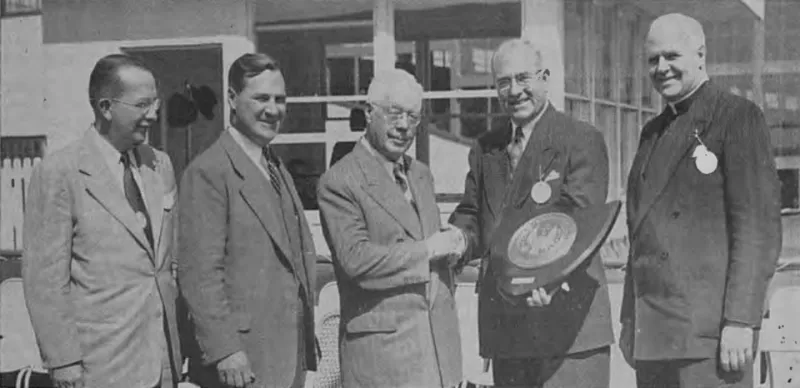
Photo: Unknown authorUnknown author, Public domain, via Wikimedia Commons
When a major American university announces a new president, the press release follows a familiar script. A national search. A diverse pool of candidates. A committee of faculty, students, and trustees working in good faith. What the announcement rarely mentions is the handshake that may have occurred months earlier, at a donor's estate in Palm Beach or a boardroom overlooking a corporate campus, where the real shortlist was settled over dessert.
The formal machinery of a presidential search — the search firm, the faculty advisory committee, the confidential candidate file — is real. But interviews with search consultants, former trustees, and candidates who were passed over suggest that this machinery increasingly operates downstream of a parallel process, one driven by the alumni and donors whose gifts keep the institution solvent. Call it the alumni veto: the informal but decisive power of booster networks to bless, block, or bury a candidacy before it ever reaches the public.
The Search That Isn't
Search consultants describe a two-track reality. On the record, there is the search committee. Off the record, there is the "pre-briefing" — the series of conversations in which major donors, often through friendly trustees, signal which names they can live with and which they cannot.
"You learn very quickly which candidates are 'non-starters,'" one consultant who has run searches for both public flagships and private research universities said, speaking on condition of anonymity. "Nobody puts it in writing. But when a trustee who chairs the search also happens to golf with the man who funded the business school, you know whose phone rings after every stakeholder meeting."
The mechanics are rarely corrupt in any prosecutable sense. Donors do not hand over envelopes. Instead, they exercise what might be called preference laundering: a gift is given with a general expectation of influence, a trustee cultivates the relationship, and when a leadership vacancy opens, the trustee's judgment quietly aligns with the benefactor's. A candidate with the wrong views on athletics spending, or a provost who once clashed with a prominent family's favored dean, finds their file never quite makes the final cut.
Where Faculty Voice Ends
Shared governance is the sacred phrase of American higher education, and faculty search committees do real work — screening credentials, conducting interviews, drafting reports. But former committee members describe a familiar pattern: a long list of academically serious candidates, followed by a final round in which the finalists are, almost uniformly, people the donor community had already vetted.
One passed-over candidate, a sitting provost at a large public university, described the experience bluntly. "I made it to the final four at an institution I won't name. I was told afterward that I was 'too much of an academic.' I've thought about that phrase a lot. It was not a compliment. It meant I hadn't spent enough time in rooms with donors."
The result is a quiet selection bias with consequences. Presidents who rise through the advancement pipeline — those who have run foundations, managed capital campaigns, cultivated wealthy alumni — are increasingly favored over candidates with deep scholarly or academic-administration credentials. The presidency, once the capstone of an academic career, is drifting toward a variant of the executive suite.
The Public University Problem
Private institutions are, in some sense, free to be governed by their benefactors; that is partly what donor autonomy means. But at public flagships, where taxpayers fund the core mission and regents are often political appointees, the alumni veto raises harder questions.
Recent leadership battles at state systems across the country — from contested chancellor picks in the South to trustee revolts in the Midwest — have followed a similar arc: a search conducted in secrecy, a finalist with strong donor ties, an eruption of faculty protest, and a governing board that confirms the pick anyway. In several cases, records requests later revealed that donors had communicated directly with regents about preferred candidates, sometimes before the search was formally launched.
Sunshine laws apply to public searches in most states, but they are easily evaded. Candidates are identified only by number. Finalists are announced days before confirmation votes. The donor conversations, conducted by phone or over private meals, leave no paper trail at all.
What the Veto Buys
Defenders of the current system make a fair point: universities are expensive, philanthropy is essential, and a president who cannot raise money is a liability. A donor who has given nine figures has, arguably, earned a voice in who stewards the institution.
But there is a difference between a voice and a veto, and the distinction matters most at moments of institutional stress. A presidency selected primarily to reassure a donor base will be hesitant to make hard choices — about athletics subsidies, about underenrolled programs, about the compensation of the advancement apparatus itself. Leaders chosen for their comfort in donor circles tend to govern for those circles.
Toward a Real Shortlist
Reform, where it has happened, has been structural rather than rhetorical. Some governing boards have begun requiring search committees to disclose the criteria used to eliminate candidates, creating a check on silent vetoes. A handful of states have tightened sunshine requirements for public university searches. Faculty senates at several institutions have demanded formal consultation rights on finalist selection, with mixed success.
The deeper fix is cultural. Universities should be able to say, plainly, that a president's first constituency is the academic mission, and that donors fund that mission rather than direct it. Until they can, the most important meeting in any presidential search will remain the one that never appears on the calendar — the quiet handshake between a trustee and the person who signs the checks.