Follow the Line Item: The Hidden Athletic Tax on America's State Flagships
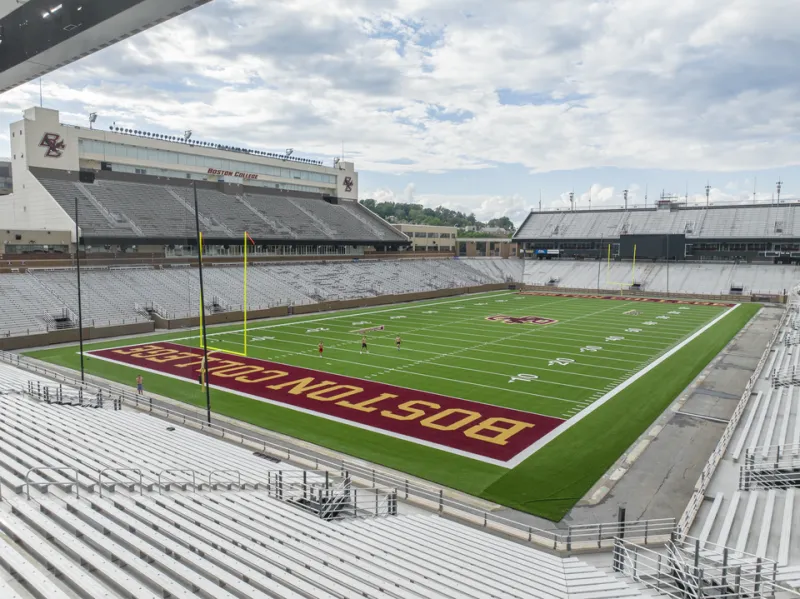
Photo: Quintinsoloviev, CC BY-SA 4.0, via Wikimedia Commons
Every public university budget contains a line most taxpayers never see and most trustees rarely discuss in public: "institutional support" flowing to the athletic department. The phrase sounds administrative, technical, almost harmless. In practice, it is the mechanism by which football and basketball programs that cannot pay their own bills are paid out of the same general fund that pays librarians, adjuncts, and graduate assistants.
A review of NCAA financial disclosures and Integrated Postsecondary Education Data System (IPEDS) filings across five state flagships — institutions in the Southeast, the Big Ten footprint, the Big 12, and two large public systems in the West — shows the scale of the arrangement. At four of the five, direct institutional support to athletics exceeded $20 million in the most recent reporting year. At one, the figure approached $40 million, a sum larger than the entire acquisitions budget of the university library system.
The Subsidy Nobody Calls a Subsidy
Athletic departments at these institutions describe themselves, in press releases and donor appeals, as self-sustaining enterprises. The disclosures tell a more complicated story. Reported revenues routinely include student fees allocated to athletics, direct transfers from the general fund, and — the largest and least examined category — "indirect support," meaning facilities, utilities, security, and administrative services provided without charge.
The accounting is not fraudulent. It is strategic. A department that pays no rent on its stadium, no market rate for its police details, and nothing for the university-owned land beneath its practice fields can truthfully claim an operating surplus. The costs have simply been moved to a ledger labeled with someone else's name.
Consider what the money buys elsewhere. At the flagship approaching $40 million in support, the figure would fund roughly 400 graduate assistantships, or several dozen tenure-line professorships, or a decade of deferred maintenance on the humanities building. Instead, it underwrites a football program whose head coach earns more than the university president, the provost, and the entire philosophy department combined.
The Multiplier Myth
Defenders of the subsidy invoke the multiplier: winning teams drive applications, donations, and state-legislative goodwill. The evidence, examined honestly, is thinner than the tailgating. The best-known study of the so-called "Flutie Effect" found that a major football success produces, at most, a modest and temporary bump in applications — and subsequent replications have found the effect fragile, concentrated in unusual cases, and largely indistinguishable from general institutional visibility.
Donations tell a similar story. Athletic giving is largely restricted giving; dollars earmarked for a scoreboard cannot be redirected to a chemistry lab. To the extent athletic fundraising crowds out academic fundraising among the same donor pool — and development officers at several of the reviewed institutions privately concede it does — the net academic effect of a big athletics program may be negative even before the subsidy is counted.
Meanwhile, the academic costs are concrete and recurring. Faculty hiring lines frozen while the strength coach's contract is extended. Library serials canceled in the same fiscal year that the athletic village expands by a practice facility. These trade-offs are never presented to a governing board as trade-offs. They are scattered across committees, fiscal years, and euphemisms.
A Unified Budget, Published in Full
The remedy is not to abolish college athletics, and it is certainly not to abolish football, an enterprise that brings genuine joy to millions of alumni and residents. The remedy is transparency sufficient to let the public judge the bargain.
Boards of trustees at public universities should be required to publish, annually, a unified athletic-academic budget: every dollar of direct and indirect support to athletics, valued at market rates, presented alongside the general-fund budgets for the library, instruction, and academic support. The NCAA already collects the underlying data. What is missing is obligation and presentation — a single document, signed by the board, that a state legislator, a reporter, or a taxpayer can read in ten minutes.
Two of the five flagship systems reviewed have moved partway in this direction, producing supplemental schedules under legislative pressure. The results have been unflattering, which is precisely why the remaining three resist. Sunlight, in this case, has a specific mechanism: once the subsidy is a number instead of a footnote, the people who fund it can decide whether they consent.
Higher education's budget crises are usually narrated as tragedies of scarcity — too little state money, too few options. Some scarcity is real. But the athletic subsidy is a choice, renewed every year in every statehouse and every boardroom, and dressed in language designed to prevent exactly the deliberation it deserves. Call the line item what it is: a transfer. Then let the trustees vote on it in public, and let the public decide.