The Quiet Reformers: Five Campus Executives Who Fixed What Was Broken
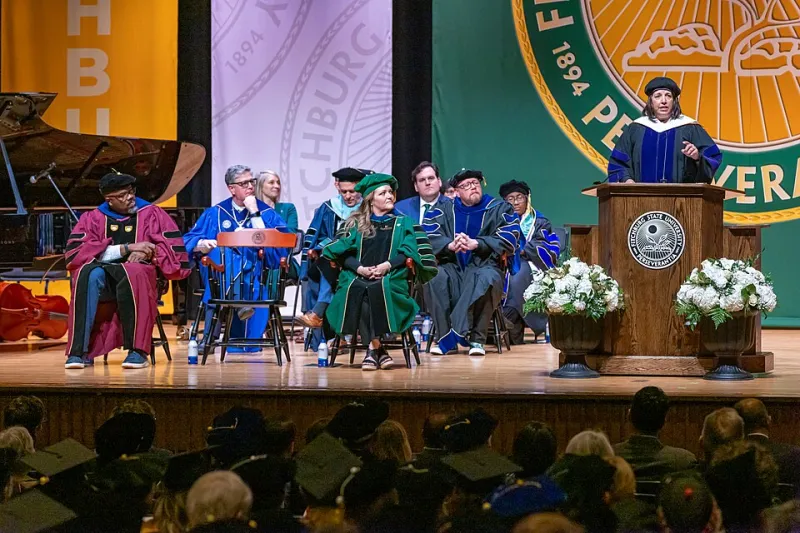
Photo: Joshua Qualls (Massachusetts Governor’s Press Office), Public domain, via Wikimedia Commons
Higher education journalism has settled into a familiar rhythm: a president says something imprudent, a board convenes, a resignation follows. The genre has its uses, but it obscures a more instructive story. Every so often, a campus executive actually changes how an institution works — and survives to see the change take root.
What follows are five profiles in institutional repair, drawn from the recent history of American colleges and universities. The names matter less than the methods.
1. The Budget Surgeon Who Published the Books
When a public university in the Midwest faced a structural deficit approaching nine figures, its new president did something almost unheard of: she put the entire operating budget online, line by line, and invited the faculty senate to a public workshop on it. Resistance to cuts, she calculated, thrives on opacity. Once professors could see the administrative payroll, the auxiliary-services losses, and the deferred-maintenance backlog, the coalition for change assembled itself.
Within three years, the deficit closed — through administrative consolidation, early-retirement incentives, and a modest tuition reset, in that order. The lesson: transparency is not just a virtue. It is a political weapon against the interest groups that prefer darkness.
2. The Curricular Rebuilder
A selective liberal arts college had accumulated a general education program so riddled with exceptions that, by the college's own audit, few students completed any coherent core at all. The incoming president refused to delegate the problem. She chaired the curriculum committee herself, spent a year attending department meetings, and — crucially — protected departments from enrollment panic by guaranteeing two years of stable staffing during the transition.
The new core passed. The playbook: reform fails when departments fear it as a zero-sum raid. Guarantee the floor, and the ceiling becomes negotiable.
3. The Accreditation Defuser
A regional university landed on accreditation probation for governance failures — a board that micromanaged curriculum and a president who could not say no to it. The fix came from an unlikely place: the president voluntarily ceded authority. She formalized shared-governance charters, gave the faculty senate binding review over academic matters, and told her own trustees, in writing, to stay out of course approvals.
Accreditation was restored in two cycles. The counterintuitive insight: executives secure their own power most durably by defining its limits.
4. The Donor Whisperer Who Said No
At a small private college, a transformative gift arrived with strings that would have hollowed out the humanities. The president declined it — publicly, courteously, and with an alternative attached. She countered with a proposal the donor could fund that served the institution's actual plan, and cultivated him over two years until he endowed it.
Enrollment, endowment, and faculty morale all held. The lesson for fundraisers everywhere: a gift that bends the institution will eventually cost more than it gives.
5. The Bloat Hunter From Within
Perhaps the least glamorous reform came at a large state system, where a new chancellor attacked administrative growth not with layoffs but with a hiring freeze and attrition math. Every vacated administrative post triggered a mandatory review before refill; every new post required a written justification posted for public comment. Over five years, administrative headcount fell by double digits while academic staffing held steady.
No dramatics, no grievances, no headlines. Just process design pointed at a target.
The Common Thread
Across these five cases, the methods rhyme: publish the numbers, protect the vulnerable, define your own authority, decline bad money, and let procedure do the fighting. Reform in the academy rarely arrives as a decree. It arrives as a well-designed process that makes the status quo harder to defend than the alternative.
Presidents who understand this — and boards that hire for it — accomplish more than any strategic plan ever drafted at a retreat.