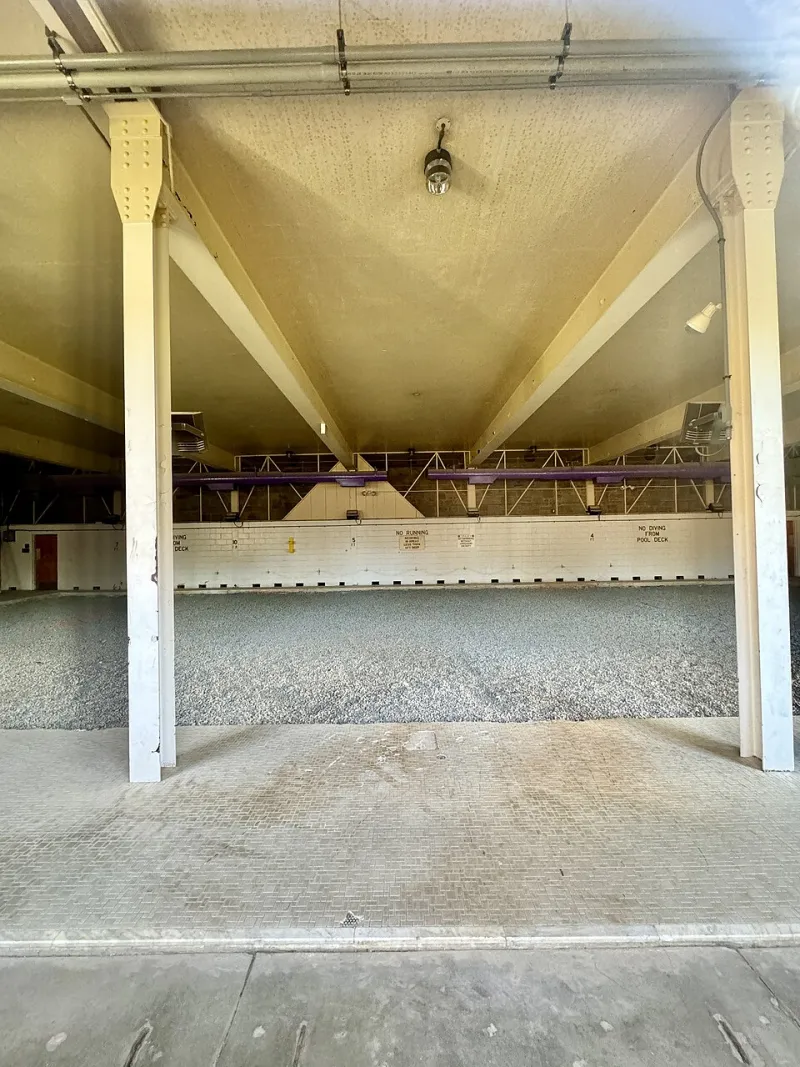
Grading in the Hallway: A Semester in the Basement of American Higher Education
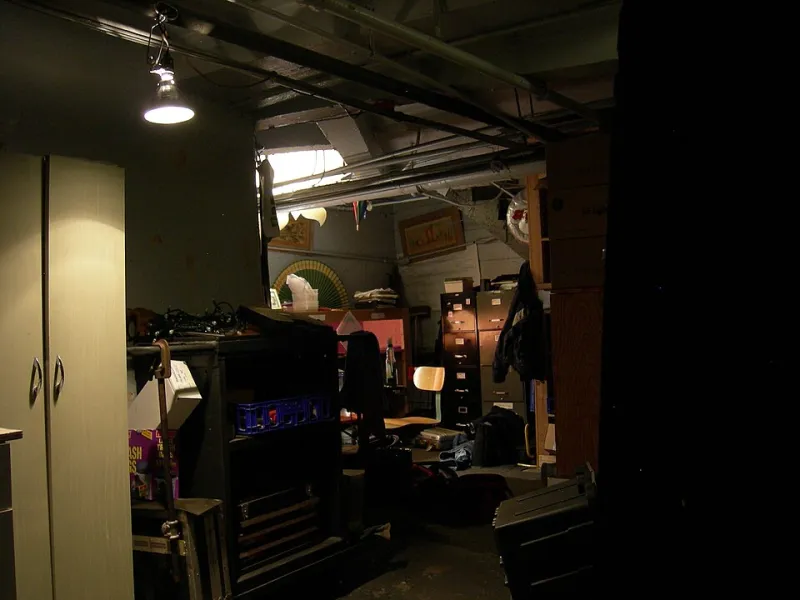
Photo: Joe Mabel., CC BY-SA 3.0, via Wikimedia Commons
The office I share with three other adjuncts is technically a storage room. It sits at the end of a hallway in the basement of a humanities building, past the vending machines that stopped accepting dollar bills sometime in 2019. There are four desks, two filing cabinets that belong to no one, and a single power strip that sparks if you plug in a laptop charger and a space heater at the same time. The radiator clanks like it is trying to tell us something.
We call it, without irony, the bullpen.
The Economics of a Cubby
My cubby contains the complete material record of my academic career: a stack of ungraded freshman compositions, a tin of pens liberated from various campus events, and an envelope of gas station receipts I keep for tax purposes. That last item is the one that tells the truth about the profession. I teach on two campuses this semester, twelve miles apart. The mileage is mine to absorb. The parking permit is mine to purchase. The office hours — the ones students are told I hold — happen at a table in the library, because the library is free and the bullpen is a forty-minute drive from my second job.
Nationally, roughly 70 percent of faculty appointments are now contingent or part-time. This is the number everyone cites and almost no one absorbs. Sit with it for a moment: the majority of instruction at American colleges is delivered by people who, like me, learn their course assignments weeks before the semester begins, who have no vote in departmental governance, and whose healthcare in some states comes not from the institution but from a spouse, the marketplace, or nothing at all.
What the Reforms Keep Missing
Every few years, a well-meaning task force convenes to reform the tenure system. Op-eds argue that tenure protects mediocrity, or that the tenure pipeline is too narrow, or that post-tenure review should be stricter. These debates are conducted as though the tenure-track were the center of gravity of the academic workforce. It is not. It is a shrinking peninsula in an ocean of contingency.
When reformers tinker with tenure, they are rearranging the furniture in a house whose foundation is rented semester to semester. The junior faculty member worried about her tenure file and the adjunct worried about her spring contract are not competing problems. They are the same problem viewed from different elevations of the building. Every tenure line that goes unfilled and is replaced by three part-time appointments is a structural decision, not a budgetary accident.
And the costs compound quietly. Contingency means students graduate having been taught entirely by people with no institutional memory, no time for mentorship, no research support, and no authority to advocate for curricular change. It means departments staffed by people who cannot say no to anything and therefore cannot say yes to anything on principle. It means the intellectual life of the university is increasingly performed by its most precarious workers, who must do that performing in the margins of second and third jobs.
A Day in the Foundation
Consider a Tuesday. I arrive at 8:40 a.m. for a 9:00 class, having graded until midnight. Between sections, I answer student emails from my phone in a stairwell because the bullpen is twenty minutes away and I have office hours at my other campus at 1:00. A student asks me to write a recommendation letter for a scholarship. I say yes, of course, and then calculate how to fit it in. A colleague in the bullpen — she has taught composition here for eleven years — mentions her contract for spring still has not been issued. It is late October.
None of this is a complaint, exactly. It is a description. And the description is the argument: you cannot understand what a university is by looking at its endowment, its president, or its climbing wall. You understand it by looking at who stands in front of the freshman lecture at 9:00 a.m., and where that person parks.
What Would Honesty Look Like
If institutions took contingency seriously, the agenda would be unglamorous: convert part-time lines to full-time, multi-year appointments; pay per-course rates that reflect preparation time, not just seat time; guarantee access to offices, benefits, and governance for anyone teaching beyond a threshold of years. Some systems and union contracts have moved this direction. Most have not, because the current arrangement is cheap in the way deferred maintenance is cheap.
The radiator in the bullpen is still clanking. Facilities says the part is on order. It has been on order for two years. Higher education's approach to its contingent workforce has the same quality: everyone acknowledges the noise, no one fixes the boiler. Until the reform conversation starts in the basement rather than the president's conference room, the tower will keep standing — on us.