Walking Papers: The Mid-Career Professors Who Resigned Their Way Into a Data Blind Spot
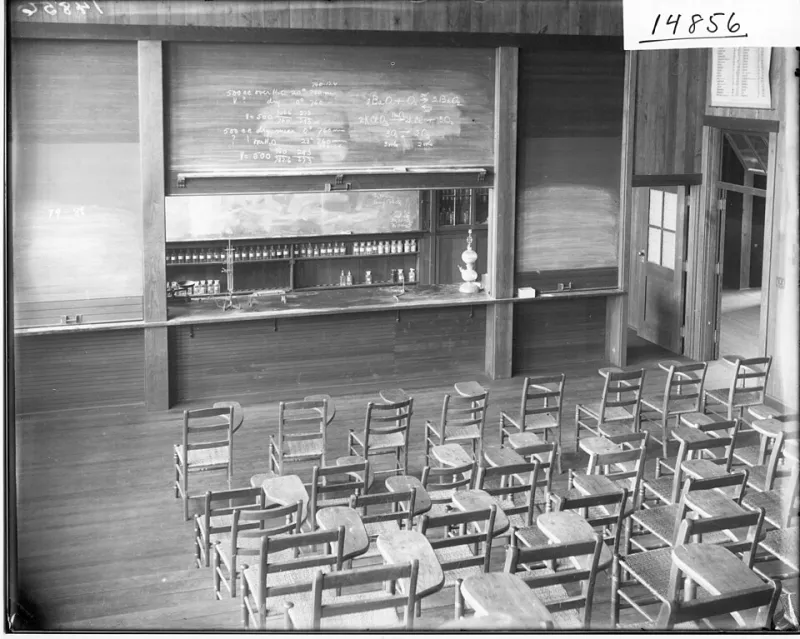
Photo: Snyder, Frank R. Flickr: Miami U. Libraries - Digital Collections, Public domain, via Wikimedia Commons
Every accredited college in the United States can tell you, to the decimal, how many first-year students it lost last fall. Retention dashboards track the churn by race, income bracket, and intended major. The federal Integrated Postsecondary Education Data System requires it. A student who leaves is a statistic; a statistic demands an explanation.
No such apparatus exists for the associate professor who resigns at forty-four.
The Exits Nobody Counts
Over the past several months, Ivory Towers spoke with five former tenure-track faculty members who left permanent positions between years six and fourteen of their appointments. None had failed to earn tenure. None had been pushed. All described the decision as an escape rather than a retreat, and all were struck by how little their institutions seemed to want to know why.
A former associate professor of sociology at a public flagship in the Midwest described her departure meeting as lasting eleven minutes. "There was no exit interview. There was a form to sign and a question about whether I wanted to buy back my sabbatical credits." She now works as a research director at a health nonprofit and earns, by her own account, roughly thirty percent more for forty fewer hours a week.
An economist who left a private university in New England put it more bluntly: "If I had been a sophomore, three administrators would have filed reports about losing me. As a professor, I was a line item that went to zero."
The Arithmetic of Departure
The financial math driving these exits is rarely discussed in faculty governance meetings, but it is transparent enough. A mid-career associate professor at a typical regional public university earns between $75,000 and $95,000. Comparable positions outside the academy — in government research, industry analytics, publishing, or nonprofit administration — commonly pay $120,000 to $160,000, often with retirement contributions that do not require a decade of vesting to become meaningful.
Layered on top are the familiar pressures: delayed homeownership in expensive college towns, childcare costs that consume a second salary, and the geographic straitjacket of a profession in which changing jobs usually means changing states. Two of the five people interviewed cited a partner's career as the decisive factor — a tension well documented among contingent faculty, but far less examined among those holding the secure jobs.
One former historian, now a content strategist, described the calculation as "ten more years of deferment for a prize I no longer wanted."
Failure as a Category Error
What makes mid-career attrition invisible is not the absence of data but the absence of a frame. When students leave, institutions call it attrition and treat it as a solvable problem. When faculty leave, particularly those past the probationary period, departments tend to narrate it as a personal choice — a spouse's job, a health matter, a change of heart. The vocabulary of institutional failure simply does not attach.
This framing has consequences. Without systematic exit interviews or longitudinal tracking of why tenured and tenure-track faculty resign, deans cannot distinguish between a healthy labor market and a deteriorating working environment. National studies, including surveys from the Collaborative on Academic Careers in Higher Education, have long documented declining faculty satisfaction, but institution-level accountability remains voluntary and rare.
Several of the former professors we interviewed noted that their departments responded to their departures not with reflection but with a search for a cheaper replacement — frequently a contingent lecturer. The vacancy became an opportunity for savings rather than a warning.
What an Honest Ledger Would Show
There are models to borrow from. A handful of research universities have piloted confidential exit interviews for departing faculty, mirroring practices standard in hospital systems and large technology firms. The practice costs almost nothing and produces exactly the signal that current governance structures suppress.
The former faculty members we spoke with offered a consistent diagnosis. They did not leave because the work was hard; they left because the institution asked for the work and offered diminishing returns in respect, compensation, and time. One summarized the sentiment shared by nearly all: "Nobody quits a job they love because it's difficult. They quit because it's difficult and nobody notices."
Attrition among mid-career faculty is not a personnel matter. It is a leading indicator of institutional health, and until universities begin counting it the way they count their students, the departures will continue — quiet, unexamined, and entirely predictable.