The Gatekeepers Nobody Audits: Inside the Accreditor's Site Visit
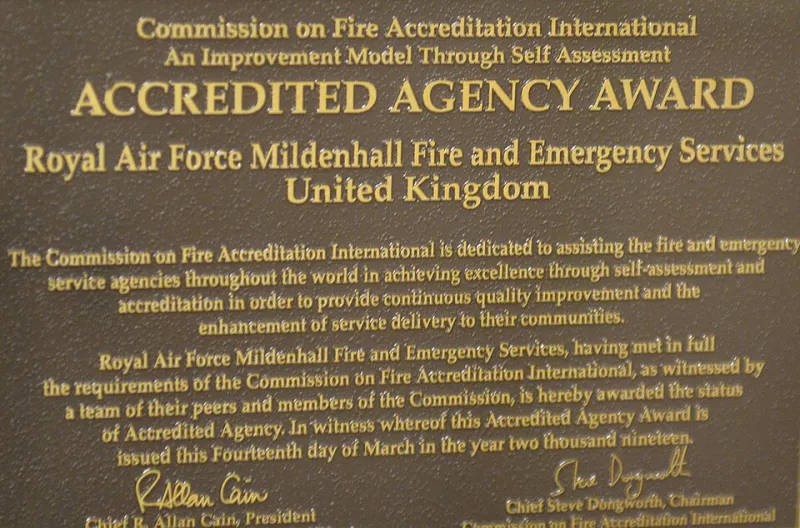
Photo: U.S. Air Force photo by Karen Abeyasekere, Public domain, via Wikimedia Commons
Every few years, a college writes a book about itself. It runs to hundreds of pages, is assembled by committees over eighteen months, and is addressed to a small team of outsiders who will read it, visit for three days, and render a judgment that determines whether the institution's students may receive federal loans and Pell Grants.
This is accreditation, and it is the least examined lever in American higher education. Colleges are audited, ranked, sued, and reported on constantly. The bodies that decide whether they may continue operating are not.
A Membership Association With a Gate
Institutional accreditors are private, nonprofit membership organizations. The colleges they review are, in most cases, also their dues-paying members, and often send the peer reviewers who conduct the reviews. Six major regional compacts long dominated the map; since the consolidations completed in the early 2020s, a smaller set of national institutional accreditors covers most of the country, alongside specialized accreditors for law, medicine, engineering, and dozens of other fields.
Their leverage is indirect and total. The U.S. Department of Education does not license colleges. It recognizes accreditors, and recognition is the channel through which an institution becomes eligible for Title IV funds. A college that loses accreditation does not merely lose a seal. It loses the revenue that keeps its doors open, usually within a semester.
The Self-Study
The process begins with the institution describing itself against the accreditor's standards — typically a dozen or so, covering mission, governance, finances, student support, and educational quality. The written product is drafted by administrators, reviewed by faculty committees, and edited for consistency of voice. It is a genre with its own conventions: the passive voice, the strategic omission, the sentence that answers a standard without disclosing anything.
Experienced reviewers know this. They arrive having already read last cycle's report and the institution's financial statements, looking less for prose than for discrepancies between what the college says about itself and what its own data show.
Three Days on Campus
A typical team numbers three to seven, drawn from peer institutions and trained in the accreditor's rubric. Days are scripted: meetings with the president and board, with faculty governance, with students, with finance and enrollment staff. Open sessions are held, though attendance is often thin and sometimes curated. Reviewers request additional documents. They look for evidence — minutes, assessment results, contracts, retention data — that claims are backed by records.
At the end of the visit, the team drafts a report. The institution may correct factual errors. The report goes to a decision-making council, usually composed of administrators and faculty from member institutions, which recommends action to the accreditor's board.
The Vocabulary of Consequence
The outcomes form a hierarchy. "Reaffirmation" is the ordinary result. "Reaffirmation with monitoring" attaches follow-up reports. "Warning" and "probation" are public sanctions. "Show cause" invites the institution to explain why accreditation should continue. "Loss of accreditation" is rare, and when it happens — as it did at a handful of for-profit chains and small private colleges over the past decade — it is typically preceded by years of documented financial deterioration and enrollment collapse.
What the vocabulary cannot express is the ordinary, quiet exercise of influence: a standard nudged during a substantive-change review, a new campus or online program delayed by a year, a merger shaped by the question of which accreditor will accept the surviving entity. These decisions reshape institutions without producing a headline.
Who Accredits the Accreditors
Two bodies perform the oversight. The Department of Education reviews accreditors for recognition, with the advice of a national advisory committee that meets in public sessions and reads staff analyses of each agency's compliance with federal criteria. The Council for Higher Education Accreditation, a private membership organization, offers a parallel recognition that carries prestige but no federal funding consequence.
The scrutiny is real but narrow. Department reviews focus on whether an accreditor's standards and procedures satisfy federal requirements — chiefly around student achievement, credit transfer, and the treatment of complaints. They are not, in the main, evaluations of whether an accreditor's judgments were correct. CHEA's reviews are similarly procedural.
That leaves the substantive question — did this accreditor get it right about this college? — largely unasked, except when a closure forces the press and the courts to ask it after the fact.
The File Room
There is a structural reason for the asymmetry. Accreditors are not public agencies and are not subject to the federal Freedom of Information Act. The self-studies they receive are the institution's property, and most colleges decline to publish them. Site visit reports are often confidential. What the public sees is a decision letter and, sometimes, a sanction.
Compare that with the disclosure demanded of the colleges themselves: consumer information pages, gainful-employment data, cohort default rates, campus security reports. The overseers operate under lighter transparency obligations than the overseen.
The argument for the arrangement is sound as far as it goes. Peer review keeps judgment in the hands of people who have run the programs they evaluate, and it insulates academic decisions from political fashion. The argument against is that a gate that decides the fate of institutions and the aid of millions of students should be visible from the outside — auditable in the way the colleges themselves are audited, and reported on in the way their budgets are.
Until then, accreditation will remain what it has been for most of its history: a serious process conducted by serious people, answerable in detail to the government and in substance to no one in particular.